


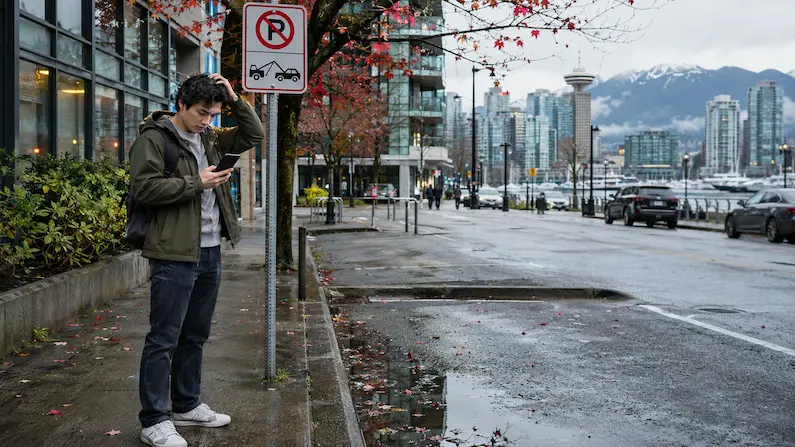
If you returned to your parking spot and found it empty, the first question is whether your vehicle was towed, moved nearby or stolen. In British Columbia, the answer depends on where you parked and who arranged the removal. A city parking tow, a private-property tow and a police impoundment can involve different companies, records and release procedures.
How do I find my car if it was towed in BC?
Quick answer: Check the original parking location for tow-away signs, temporary restrictions and nearby relocation spots. Contact the property manager if you parked on private property, or the municipality if you parked on a public street. If police ordered an impoundment, use the information on the Notice of Impoundment. Confirm the vehicle’s location and release requirements before travelling to a yard.
Do not assume the nearest towing company has your car. There is no single province-wide public search tool that identifies every municipal, private-property and police-ordered tow.
First, check the parking location safely
If your vehicle is already attached to a tow truck, approach the operator only when it is safe to do so. In Vancouver, drivers can request release while a tow is in progress, although an unhooking fee applies. Richmond has separate rules for private-property towing. Never interfere with towing equipment or put yourself in the truck’s path.
- Confirm the exact spot. Recheck the street name, building level, stall number and nearby entrances. In a large parkade, two levels can look identical.
- Look for current restrictions. Note tow-away signs, temporary no-parking notices, event closures, construction notices and any ticket left at the location.
- Check close-by streets where safe. In Vancouver, the City advises that vehicles may be courtesy towed nearby because of construction or other City work rather than taken to an impound lot.
- Ask the responsible party. Building security, a parking operator, a strata representative or a work crew may know which company was called.
- Record the details. Save the time, location, parking receipt, photos of signs and any communications. You may need them when contacting the towing company or disputing a related ticket.
If you can see your vehicle attached to a tow truck, do not climb onto the truck, stand in its path or try to disconnect equipment. Speak with the operator from a safe position. Rules about release before departure vary by municipality and circumstances; do not assume a tow can always be stopped.
Where should you look? Follow the type of tow
| Where or why the vehicle disappeared | Best first contact | What to confirm |
|---|---|---|
| Public street or municipal parking area | City parking enforcement or the municipality’s official impound information | Whether a municipal tow was requested and which yard received the vehicle |
| Shopping centre, private lot or residential parkade | Posted towing company, property manager or parking operator | Who authorized the tow and the destination yard |
| Traffic stop or police-ordered vehicle impoundment | Notice of Impoundment and the named impound lot | Impound period, release eligibility and required documents |
| Construction site, filming area or special event | Nearby work crew, event organizer or local municipality | Whether the vehicle was relocated a short distance |
| No confirmed tow or relocation | Local police, using the appropriate emergency or non-emergency channel | Whether the vehicle should be reported stolen |
The distinction matters because a contractor who provides voluntary roadside towing may not have access to enforcement-tow records or authority to release an impounded vehicle.
Finding a towed car in Vancouver
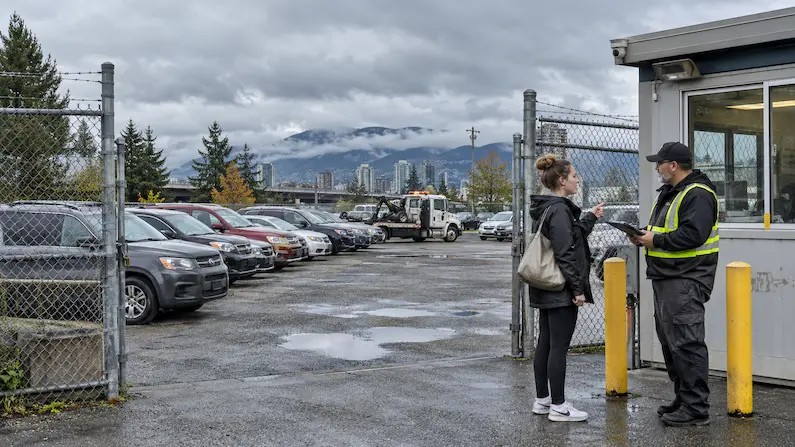
For vehicles removed from Vancouver city streets or parks, begin with the City of Vancouver’s impounded-vehicles page. The City identifies its City Impound Yard at 425 Industrial Avenue and links to an officially referenced vehicle-search service operated by Busters Towing. Use the search option provided on the City’s page, or check the City’s current contact information and operating hours before visiting the yard.
If your car was removed from a commercial lot or garage, Vancouver tells drivers to look at the tow-away sign on the premises. That sign may identify a different towing company and yard than the one used for city street enforcement.
There is a separate process for some abandoned vehicles. Vancouver lists an Abandoned Vehicle Yard at 1150 East Kent Avenue South, so a vehicle considered abandoned may not appear at the regular city yard. The City’s page also explains that a vehicle moved for construction may be parked nearby, not impounded at all.
If you have checked the appropriate yards and nearby relocation possibilities without locating your vehicle, follow the City’s instructions to contact the Vancouver Police Department about a possible theft. Do not file a theft report simply because the first yard you called could not find the car.
Finding a towed car in Richmond, Delta or another BC municipality
Richmond
The City of Richmond’s towing page states that vehicles towed by City Parking Officers or local police are currently handled by Rusty’s Towing, at 14600 River Road, Richmond. The City provides the operator’s contact information on that page. Check it before going anywhere, because contractors and procedures can change.
Richmond also has specific rules and permit requirements for towing from private parking lots. A private-property tow is therefore not automatically the same as a City Parking Officer tow. Begin with posted parking notices and the business or property manager to identify the right operator.
Delta and other communities
For Delta, Burnaby, Surrey, New Westminster and other municipalities, start with that municipality’s official parking-enforcement information or the contact named on the posted sign. If the local website does not identify the towing operator, contact the municipality or the relevant police non-emergency line and ask how to verify a reported removal. Do not travel to a Vancouver or Richmond yard solely because it is nearby.
If you crossed a municipal boundary to park for an event, work shift or transit connection, search the jurisdiction where the vehicle was actually parked, not the city where you live.
What if the police impounded your vehicle?
Quick answer: A police impoundment is not simply a parking tow. British Columbia police can order certain vehicles removed under the Motor Vehicle Act. The Notice of Impoundment identifies the case and helps you confirm the impound lot and duration. A vehicle generally cannot be collected until it is eligible for release and the lot’s documentation requirements are met.
According to ICBC’s vehicle-impoundment guidance, reasons can include impaired driving, driving while prohibited or unlicensed, excessive speeding and street racing. The length of the impoundment depends on the offence and relevant history. It is not safe to assume every vehicle will be released the next day.
If you were the driver, retain your Notice of Impoundment and read it carefully. If you own the vehicle but someone else was driving, contact the responsible authority using the notice and ICBC or RoadSafetyBC’s official instructions. The registered owner, driver and person authorized to collect the vehicle may have different roles in the process.
For eligible impoundments of 30 days or longer, ICBC advises booking an appointment at a driver licensing office within 14 days of receiving the Notice of Impoundment. Under section 256 of the BC Motor Vehicle Act, the application deadline for specified reviews is 15 days from the start of the impoundment. Review rights and deadlines depend on the legal basis for the impoundment. Check your notice and follow the current ICBC vehicle impoundment instructions promptly. This guide does not determine eligibility or provide legal advice.
What information should you have before calling an impound lot?
Giving a clear description can help staff search their records and tell you whether the vehicle is ready for pickup. Have the following details available if possible:
- Licence plate number and province of registration.
- Vehicle make, model, colour and approximate year.
- Vehicle identification number (VIN), if readily available in your registration or insurance documents.
- Exact or approximate location where it was last parked, including the stall or building level.
- Date and time you last saw it, plus any ticket, incident number or impoundment notice.
- Your name and relationship to the registered owner.
Ask the yard to confirm the address, business hours, identity checks, acceptable payment methods and release status. Make sure you know whether you need to bring keys or an additional licensed driver. Do not send photos of identity documents or personal account information to an unverified contact found in a text message or unofficial listing.
How do you get your vehicle back?
The practical steps differ depending on the reason for removal. For an ordinary parking impound, the company may explain the paperwork and conditions for collecting your car. For a police-ordered impoundment, a release restriction can remain in force even when the vehicle has been located.
- Confirm the vehicle is at that yard. Ask staff to match the plate or VIN and verify the address before travelling.
- Confirm whether it may be released. Ask whether a municipal hold, police impoundment period or additional authorization applies.
- Check identification and ownership requirements. Have government-issued identification and registration documents available; a police impoundment may also require the Notice of Impoundment and a release order.
- Plan a lawful trip home. Arrange for a properly licensed driver and confirm that the vehicle is insured, roadworthy and permitted to be driven.
- Inspect the vehicle before leaving. In a safe area, photograph visible condition and note any apparent damage or missing belongings. Report concerns to the lot promptly and keep the paperwork.
RoadSafetyBC’s official impound-lot guidance explains that release can require an order and that an owner may arrange for an authorized person to collect the vehicle under the applicable process. If you cannot attend personally, ask the responsible authority what authorization is required before sending someone else.
For a vehicle that is not roadworthy, has a flat tire, will not start or must not be driven under its current conditions, arrange suitable transportation rather than attempting to drive it out of the lot.
What if the vehicle has damage, missing property or will not start?
Finding your car does not always mean you should immediately drive it. A flat tire, warning light, fluid leak, collision damage or unusual noise may require an assessment. Keep clear photographs of the condition you observed, along with the date, location and receipt. If something is missing or damaged, report it to the yard and ask about its claims or incident-reporting process.
For a vehicle that has been in a collision, follow the applicable police, insurer and repair-facility instructions. ICBC’s claims guidance is a starting point for determining whether and how to report a covered incident. Do not assume that every towing, storage, property-loss or repair expense is insured.
Vehicle characteristics also affect transportation. Low ground clearance, all-wheel drive, electric propulsion, locked steering, missing keys and collision damage may restrict appropriate loading or towing methods. An electric vehicle with suspected high-voltage damage must not be handled or moved by an untrained person. Tell a qualified towing operator the exact make, model, year and condition so the manufacturer’s instructions can be checked before transport.
What if no towing company can find your car?
If the municipality or property manager confirms a tow but cannot find a matching record, ask whether the licence plate or VIN may have been entered incorrectly. Keep a record of who you contacted, when you called and what they confirmed.
When there is no confirmed tow or authorized relocation and you have reason to believe the car was stolen, contact the local police. Use 911 if there is an immediate emergency or danger; otherwise use the police service’s appropriate non-emergency or online reporting process. If a theft is confirmed, follow the insurer’s reporting instructions. A connected-car location feature may provide additional information, but do not confront anyone or try to recover a suspected stolen vehicle yourself.
When should you call a towing professional?
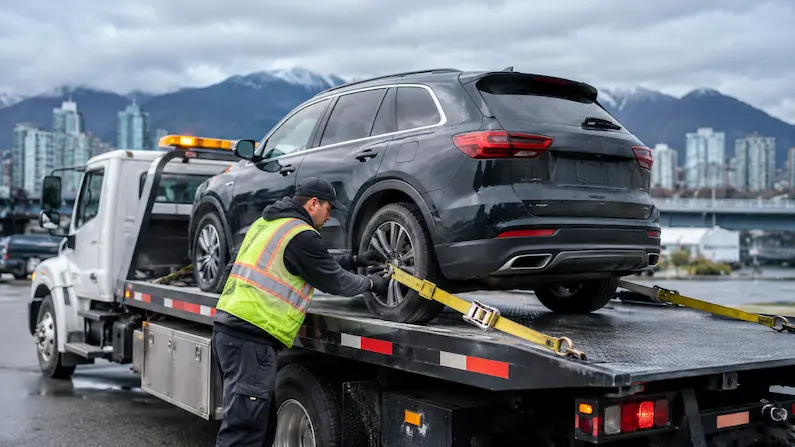
Quick answer: Call a professional towing operator if the vehicle is located but cannot be legally or safely driven, such as after a collision, a mechanical failure or a situation requiring specialized loading. An independent tow truck does not replace the municipality, police or impound lot’s authority to identify or release an impounded vehicle.
Before booking transport, confirm the lot will release the vehicle, where it must go and whether its condition imposes equipment restrictions. If access is limited by a low-ceiling parkade, restricted gate or loading zone, communicate that before dispatch. For cars and light trucks that need authorized transportation, Aria Towing describes its cars and trucks towing service and relevant coverage in Metro Vancouver. This is separate from locating a vehicle held by an enforcement contractor.
A missing vehicle can feel urgent, but the most effective first move is to identify who arranged its removal. Start with the parking location, confirm the correct authority and yard, and only then plan pickup or onward transport.
If your vehicle has been released but needs a separate tow in Metro Vancouver, contact Aria Towing to discuss transportation options.