


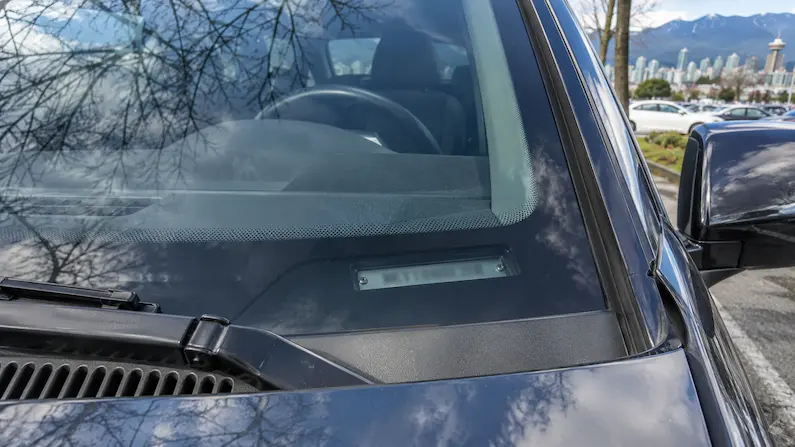
If your car has disappeared from its parking spot, its vehicle identification number (VIN) may help an impound lot or towing company identify it. However, a VIN is not a universal tracking number, and entering it into a general vehicle-history website will not normally tell you where a car was towed. In British Columbia, the best search method depends on which authority or company arranged the tow.
Can you locate an impounded vehicle using only its VIN?
Quick answer: Sometimes, but usually by contacting the responsible towing company, impound lot or authority directly. A VIN can help staff distinguish your vehicle from similar cars, yet there is no single public VIN search that locates every towed vehicle in BC. Some public impound searches require a licence plate instead.
The distinction matters because a VIN identifies a vehicle, while an impound record identifies a particular towing event. An operator must have an accessible record linking the two before the VIN can help locate the car. A vehicle may also have been relocated nearby rather than taken to an impound yard.
For example, the City of Vancouver’s impounded-vehicle guidance directs drivers to the city’s impound arrangements. The public vehicle search on the associated Busters Towing website asks for a licence plate, not a VIN. If you have only a VIN, contact the operator rather than assuming the online search accepts it.
Why a VIN helps identify a car but does not show its location
A vehicle identification number is assigned to an individual vehicle. For most modern vehicles, it contains 17 characters and can help identify the manufacturer, model, model year and the specific vehicle. Some older or specially registered vehicles may have a different VIN format.
Think of the VIN as an identification reference, not a GPS signal. It does not transmit a car’s location, indicate that a tow occurred or identify the company holding the vehicle. Even a correct VIN will not help an online search if that system is designed to accept only licence plates or if the vehicle has not been entered into its records.
Official BC police impoundment paperwork includes both a VIN and licence plate number. That supports using the VIN to confirm a match when speaking with an authorized operator, but it should not be mistaken for evidence of a province-wide public VIN locator.
How to find a towed vehicle when you have the VIN
Quick answer: If you only have the VIN, start by identifying where and when the vehicle disappeared. Contact the municipality, property manager, police or towing operator responsible for that location. Ask whether they can search by VIN or need a licence plate, vehicle description or impoundment reference to locate the record.
- Confirm the exact parking location. Note the street address, nearby intersection, lot or parkade level, and the last time the vehicle was seen. This helps determine which organization may have ordered a tow.
- Check the type of property. For a city street, start with the municipality’s official towing guidance. For a private garage, review tow-away signs or contact building management. For a police-ordered impoundment, consult the Notice of Impoundment or the police service involved.
- Gather identifiers. Have the VIN, licence plate, province of registration, make, model, colour and approximate model year available. Do not provide sensitive personal documents to an unfamiliar website that claims it can locate any impounded car.
- Use the official channel first. A municipality may link to a contracted operator’s search or provide a designated impound contact. If a search asks for a licence plate, use that field as intended; otherwise, contact the organization for help.
- Ask staff to check alternate identifiers. If a plate search produces no result, ask whether they can check a VIN or vehicle description and whether records may still be pending. Availability of such a check varies by organization.
- Verify before travelling. Request the yard address, opening or release arrangements, ownership documents required, applicable restrictions and whether an appointment or authorization is needed.
If you have lost track of the original parking location or do not know who ordered the removal, read Aria Towing’s broader guide, Car Towed in BC? How to Find It and What to Do Next. That article covers the wider question of whether a vehicle was towed, relocated or stolen.
VIN, licence plate or impoundment number: which should you use?
| Identifier | What it identifies | Best use when searching | Important limitation |
|---|---|---|---|
| VIN | The individual vehicle | Confirming a vehicle match with an authorized operator | Not every public search accepts VINs |
| Licence plate | A vehicle’s current or recorded registration plate | Using plate-based impound searches | May be entered incorrectly, missing or changed |
| Notice or impoundment number | A recorded impoundment event | Following up on a police-ordered impoundment | Not generally available for ordinary parking-related tows |
| Make, model and colour | A description of the vehicle | Helping staff investigate a possible record mismatch | Not unique enough to prove identity or ownership |
A VIN is particularly useful when a vehicle’s plate is missing or has been recorded incorrectly. However, the company may still require the registered owner’s name, supporting identification or another detail before confirming information or arranging release. Do not assume that knowing a VIN alone establishes a right to collect a vehicle.
Where should drivers check in Vancouver, Richmond and Delta?
Quick answer: Use the location and circumstances of the tow to select the right official contact. Vancouver provides a city impound process and a linked operator search. Richmond publishes information about its municipal towing arrangements. In Delta, start with the City, the property manager or the police service involved rather than assuming that every vehicle goes to one yard.
Vancouver: city streets versus private parking
The City of Vancouver identifies its City Impound Yard at 425 Industrial Avenue for vehicles towed from city streets or parks. It also links to a vehicle search through Busters Towing. As checked for this guide, that public search requests a licence plate.
If a vehicle was taken from a commercial parkade or other private property, the City advises drivers to look for the towing company’s information on a tow-away sign. An abandoned vehicle may be handled through a separate City yard at 1150 East Kent Avenue South. These are different pathways; do not treat the city-street search as a complete database of private-property removals.
The City also notes that vehicles can sometimes be moved nearby during construction or other works. This is another reason that an unsuccessful VIN or plate lookup does not, by itself, prove a vehicle has been stolen.
Richmond: check who ordered the tow
The City of Richmond’s towing information identifies Rusty’s Towing at 14600 River Road for vehicles towed by City Parking Officers or local police under the arrangements described on that page. Confirm current handling and the vehicle’s actual location with the responsible organization before visiting.
Private-property towing is a separate situation. A mall, commercial lot, strata or property manager may be able to identify which operator was authorized to remove the car. Check the parking area’s posted tow-away signs and contact the property manager for the towing company’s information before searching unrelated operators’ websites.
Delta: identify the authority and operator
For a vehicle missing from a street, public facility or private lot in Delta, first determine whether municipal staff, police, a property manager or another authorized party arranged its removal. Ask the relevant organization for the contracted operator and impound location. An operator-specific lookup, if available, covers that operator’s records rather than every vehicle towed in Delta.
If you suspect a formal police impoundment, obtain the incident or Notice of Impoundment information through the appropriate police channel. If the vehicle was removed from a private parking area, contact the property operator and review the posted tow-away information. Do not drive from yard to yard without confirming that the vehicle is actually there.
What if you do not know your VIN or licence plate?
Quick answer: Look for the VIN and plate details in your vehicle registration or insurance records, or contact your insurer or Autoplan broker for help accessing your documents. If you do not have either identifier, a responsible impound company may still be able to advise what information it needs to investigate, but a vehicle description alone may not establish ownership.
Eligible vehicle owners may be able to access and print active ICBC insurance documents online. This service has eligibility restrictions, including for certain company-owned and fleet vehicles. If you cannot access your documents, contact an Autoplan broker for assistance.
Other places to check include a saved registration copy, purchase paperwork, a lease agreement or earlier service records. Confirm that the VIN belongs to the missing vehicle, especially if you manage several cars or have replaced a vehicle recently.
On a car you can physically inspect, a VIN is commonly visible at the base of the windscreen on the driver’s side or on the driver’s door area. However, if the car has already been removed, that advice will not help you locate it immediately. Use documents you can access safely instead of entering a restricted lot or attempting to inspect a vehicle without permission.
Can a VIN report, vehicle-history website or GPS app locate a towed car?
Quick answer: A standard VIN decoder or vehicle-history report is not a live towing locator. It may help describe or verify a vehicle, but it does not establish which impound lot currently holds it. A connected-vehicle app may show a last-known location when supported and functioning; that information must still be confirmed with the responsible authority.
Be cautious of third-party websites that promise an instant nationwide impound location from a VIN alone. Before sharing your VIN, identity documents or payment details, verify that a service is operated by the relevant municipality, police agency or towing company. An advertisement or search-result ranking is not proof of official status.
If a manufacturer’s app shows your vehicle at a particular address, do not enter a secured yard or confront anyone. Contact the appropriate operator or police service and explain what the app shows. Connectivity, privacy settings, battery state and the model’s capabilities may affect whether location information is available or current.
Why might a legitimate search return no matching vehicle?
An unsuccessful result is a reason to investigate, not a final determination. Several practical issues can explain a missing match:
- Wrong operator: The vehicle may have been removed by a different municipal contractor or private-property towing company.
- Different identifier: A public form may be plate-based even when the caller has a VIN.
- Data entry error: Letters, numbers, plate jurisdictions or vehicle details may not match the stored record.
- Record timing: The operator may need time to record or make an event searchable; do not assume an exact update interval.
- Relocation rather than impoundment: The car may have been moved to another legal nearby space during work or an event.
- Different custody process: Police seizures, collision-related storage and ordinary parking tows may be handled differently.
When contacting an organization, record the date and time of your enquiry, the department or operator’s name and any reference number provided. Ask whether there is another official contact to check. This creates a clear record if you need to follow up with the municipality, insurer or police.
What if the vehicle was impounded by police?
Quick answer: Use your Notice of Impoundment and the police or RoadSafetyBC process, not a general VIN search, to confirm custody and release requirements. In BC, a police impoundment can involve a statutory holding period. A vehicle’s location being known does not mean it can be released immediately.
In British Columbia, police can impound vehicles for certain driving offences. Depending on the circumstances, the vehicle may be subject to a mandatory holding period, and collecting it may require identification, impoundment documentation and compliance with the applicable release process.
The RoadSafetyBC impound lot guidance explains that an owner may authorize someone else to collect a qualifying vehicle, subject to an authorization and order-of-release process. Corporate vehicles may require authorization from a fleet manager or another responsible company representative. Confirm the exact requirements for your case with the agency or lot.
VIN, plate and impoundment numbers serve different roles here. The VIN helps establish which vehicle was taken; the impoundment documentation records the legal event and guides release. A search result is not a substitute for a release authorization.
What should you prepare before collecting a vehicle?
Quick answer: First confirm the correct impound yard and ask what documents, identification, authorization and release conditions apply. Bring the items the operator specifies, rather than assuming your VIN is sufficient. If the vehicle is damaged, inoperable or subject to a hold, arrange the next steps with the lot and any relevant insurer before travelling.
- Confirm the vehicle identification and whether it has been cleared for release.
- Ask the impound lot which proof of identity and ownership or authorization is required.
- Check whether the person collecting the car must be the registered owner or a formally authorized representative.
- Ask about collection hours, access arrangements and any restrictions on removing personal belongings.
- Determine whether the vehicle can be driven legally and safely after release.
- If the car was involved in a collision, coordinate with the insurer or repair facility as needed.
For a business or fleet vehicle, confirm who is legally entitled to authorize release. A driver who knows the VIN and company name may still need paperwork from the registered owner or fleet manager. Avoid sending personal identification or vehicle documents to unverified contacts.
When is professional towing or emergency assistance appropriate?
Quick answer: Professional towing may be appropriate after a vehicle has been released if it is damaged, mechanically unsafe, cannot be driven or must be transported to a repair shop. Emergency services are appropriate when people face immediate danger, such as an active collision scene, fire or a hazardous roadside situation. Finding an impounded vehicle does not itself require booking another tow.
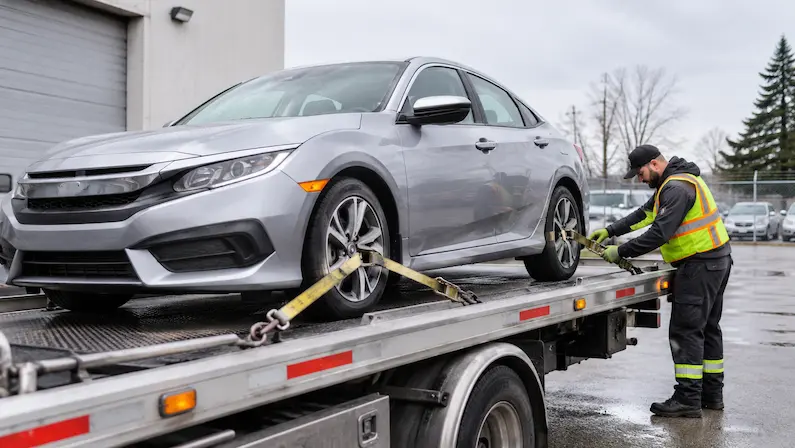
If your car is released but will not start, do not automatically assume a jump-start is safe or sufficient. Collision damage, fluid leaks, compromised wheels or steering problems may make driving unsafe. Tell the towing provider about the vehicle’s condition and destination, and request a suitable transport plan.
Vehicle type can change the handling requirements. All-wheel-drive vehicles, electric vehicles, low-clearance cars and vehicles with damaged suspension may have manufacturer-specific restrictions. An operator should verify the relevant make, model, year and manufacturer’s towing instructions before selecting equipment. Never attempt to reposition a suspected damaged high-voltage electric vehicle yourself.
Aria Towing describes car and truck towing services on its website. This service is relevant if a confirmed and released vehicle needs transport; it is not a replacement for contacting the authority or impound operator that holds the car.
What if no authority or impound company can confirm a tow?
Once you have checked the responsible municipality, property manager, applicable towing operators and any lawful relocation possibilities, contact the local police through the appropriate non-emergency channel if the vehicle may have been stolen. Call 911 when there is an immediate threat to life or safety, not simply because a parked car is missing.
Do not try to retrieve a suspected stolen vehicle or confront a person at a location reported by an app. Follow police instructions and your insurer’s reporting process. Keep your VIN, plate details and the timeline of your enquiries available for the report.
The practical takeaway
A VIN is useful for confirming a vehicle’s identity, not tracking its towing location. The most reliable next step is to contact the organization responsible for the removal and confirm its search and release requirements. If the vehicle cannot be driven safely after release, arrange suitable professional transport.
If your released vehicle needs to be moved to a repair facility or another destination in Metro Vancouver, contact Aria Towing about available vehicle transport assistance.